
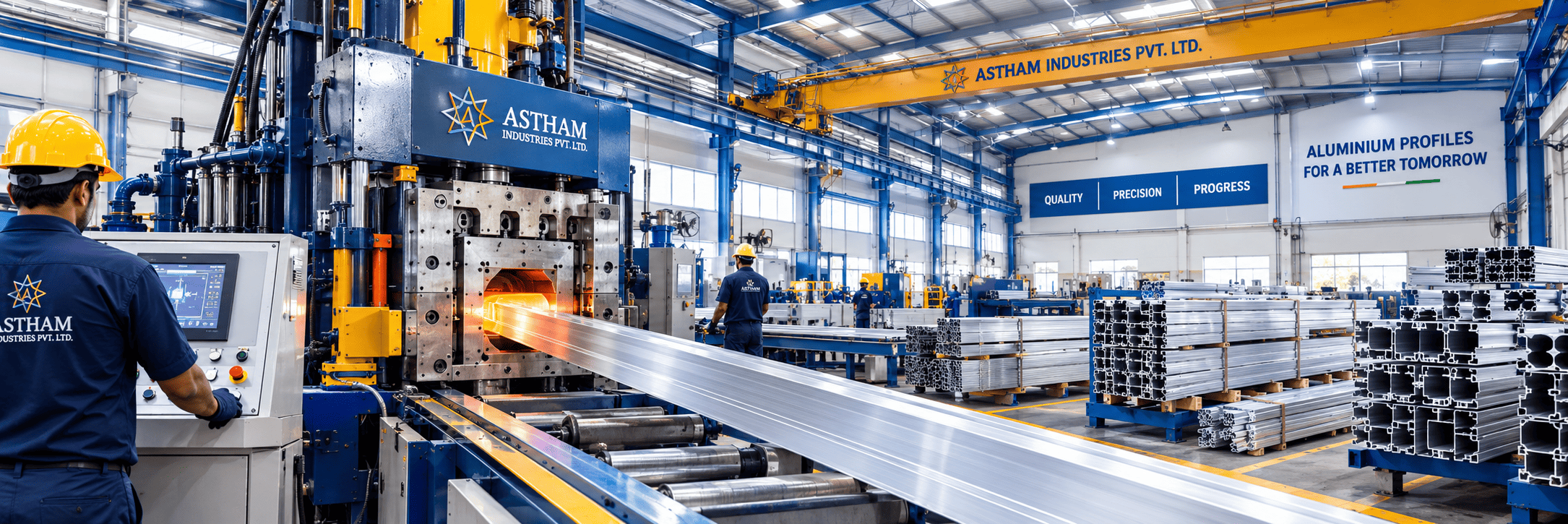
Manufacturing Process & Heavy Infrastructure
From prime virgin ingot homogenization to computer-controlled artificial aging, automated quenching, and in-line dimensional optical testing, discover the engineering precision behind our extrusion output.
Our Extrusion Process
Continuous metallurgical monitoring, nitrogen die cooling, and automated temperature feedback ensure optimal grain structures and zero-defect profiles.
Raw Material Inspection & Billet Preheating
Only primary virgin aluminium billets (A8 grade, 99.7% purity) from certified primary smelters are used. Billets are ultrasonically tested for inclusions and heated in automated gas-fired gradient log heaters to 450°C - 480°C.
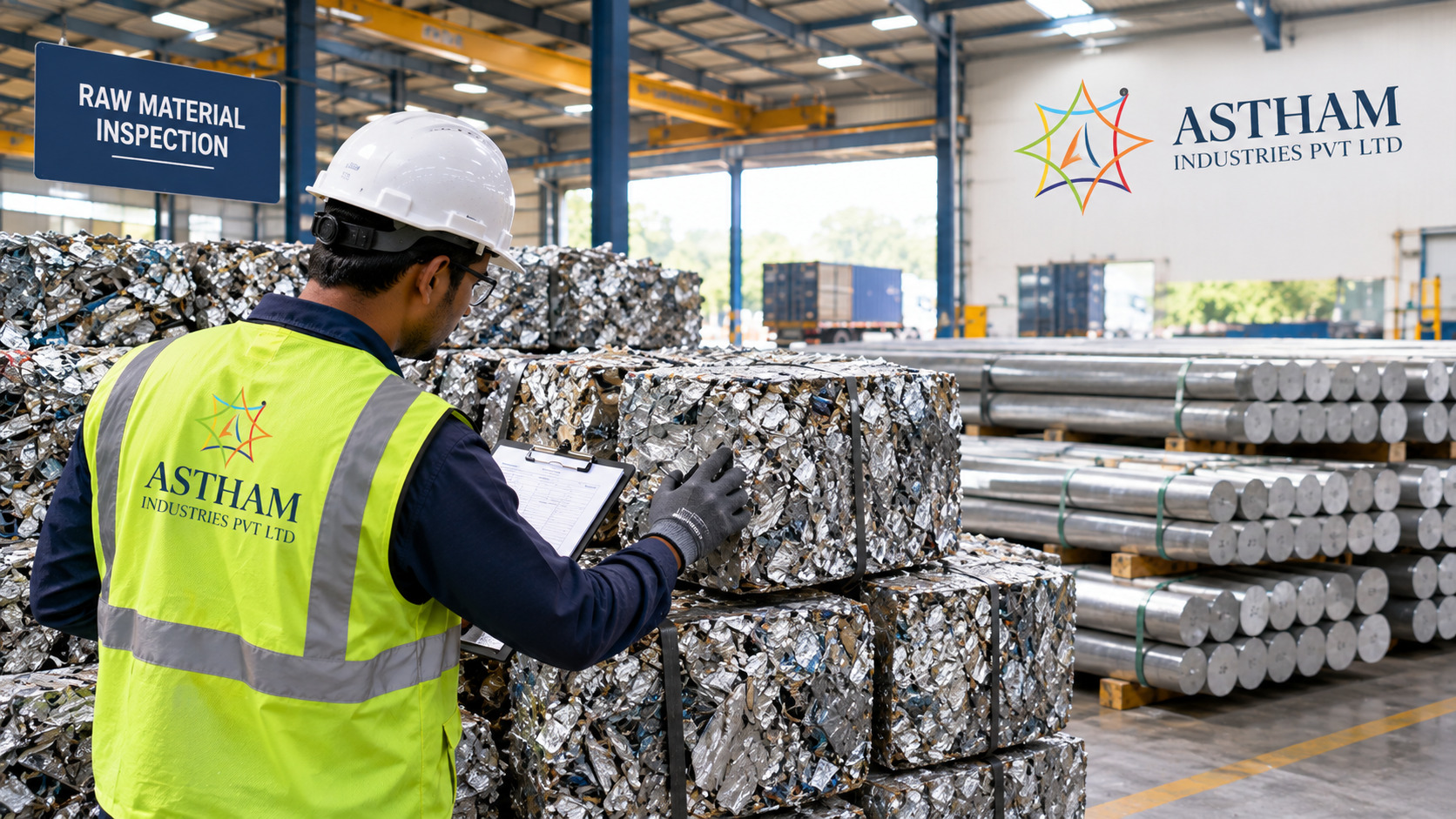
Automated Gas-Fired Gradient Log Heater
Automated Gas-Fired Gradient Log Heater
Precision Die Design & Tool Heating
Custom extrusion dies manufactured in-house on high-precision CNC Wire-EDMs are inspected and soaked in die ovens at 460°C to match billet temperature, preventing thermal shock and surface defects.
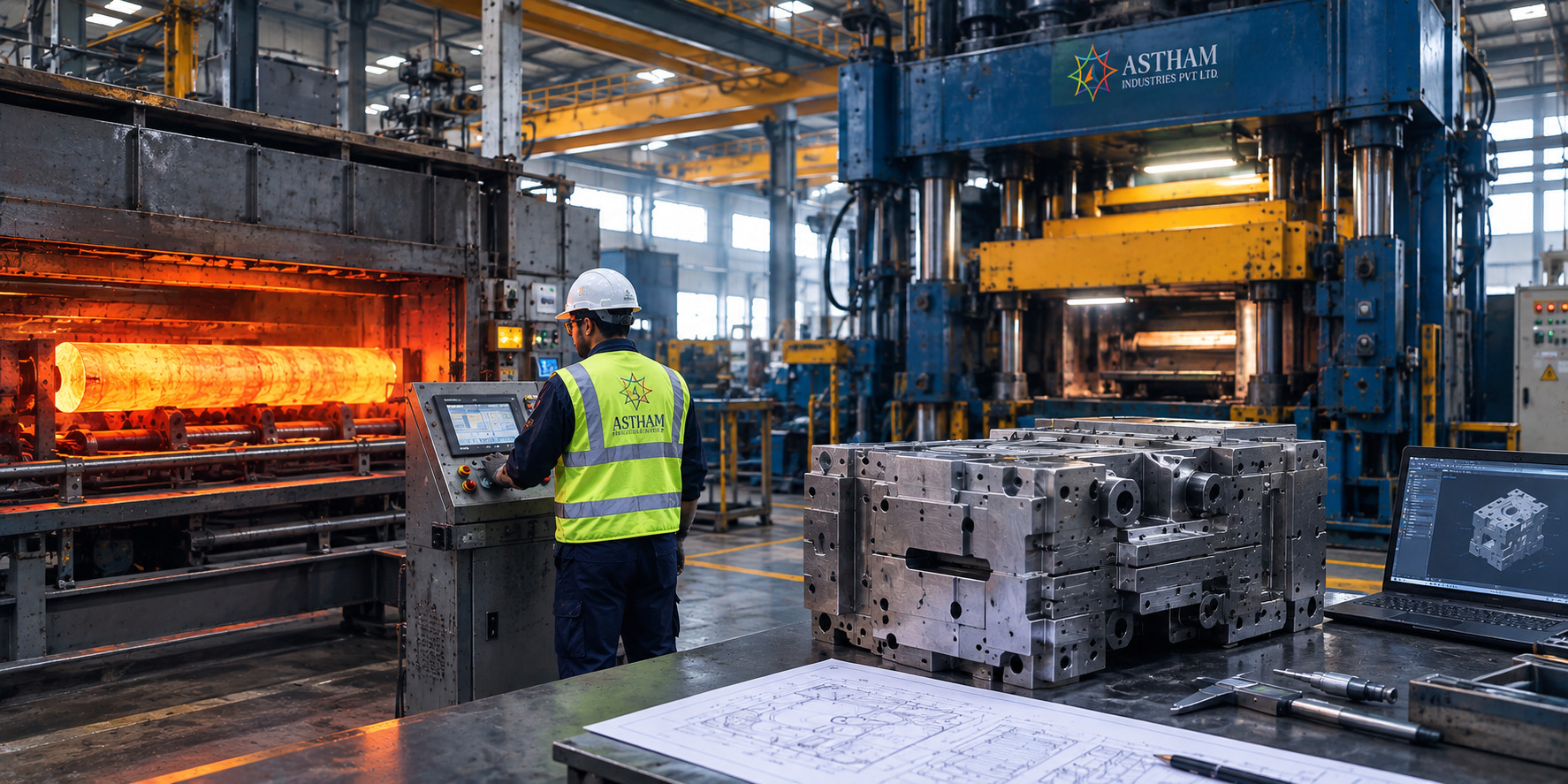
High-Precision CNC Wire-EDM Die Machining
High-Precision CNC Wire-EDM Die Machining
Hydraulic Extrusion Pressing
The heated billet is sheared and forced under immense hydraulic pressure (up to 1,800 Metric Tons) through the steel die aperture, flowing plasticized metal into complex hollow or solid geometries.
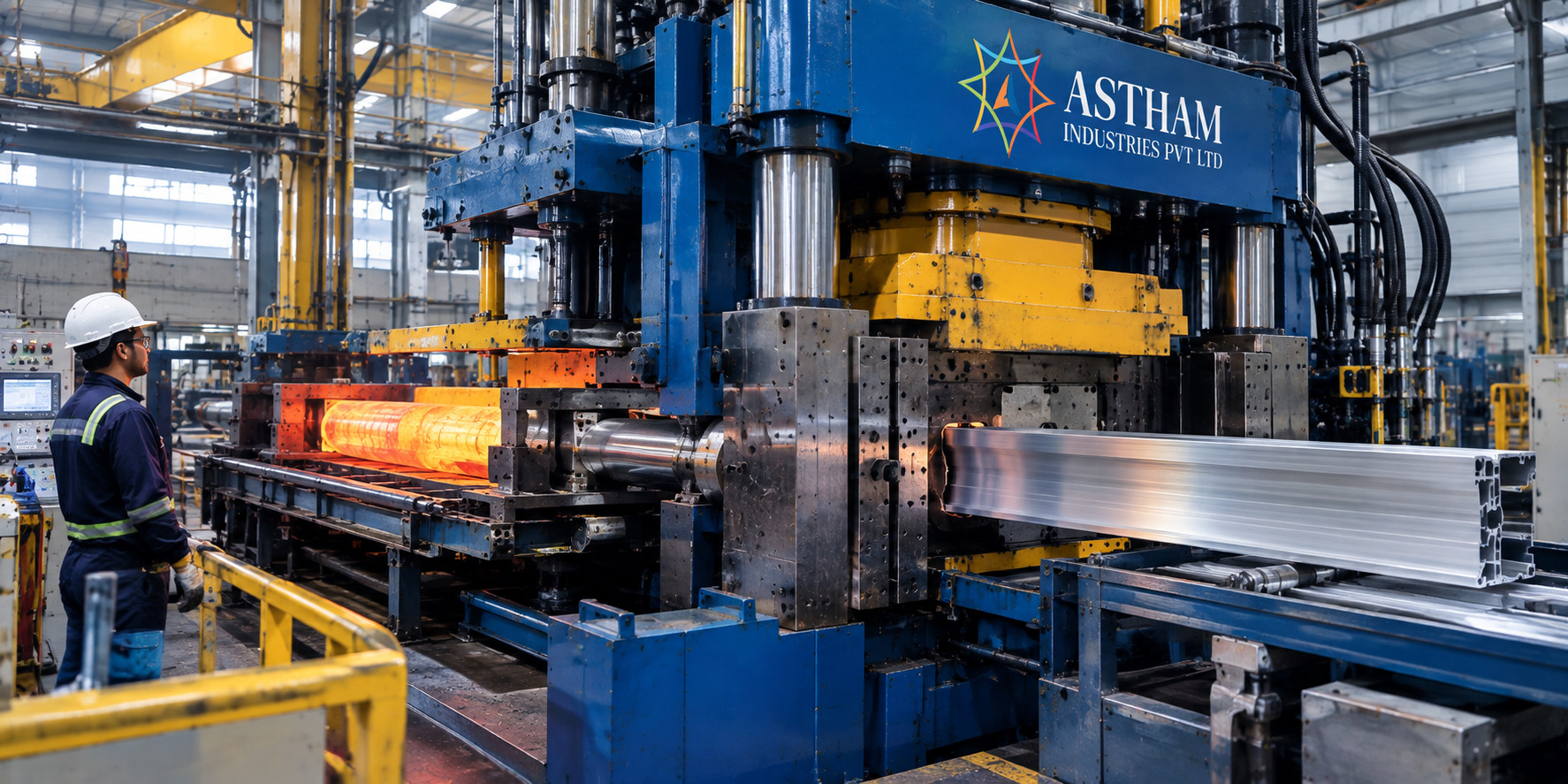
1,800 MT Direct Hydraulic Extrusion Press Line
1,800 MT Direct Hydraulic Extrusion Press Line
Intensive In-Line Quenching
As the profile exits the die at speeds up to 50 meters per minute, it is rapidly cooled using controlled high-velocity water mist and forced air jets to lock in alloy alloying elements into solid solution.
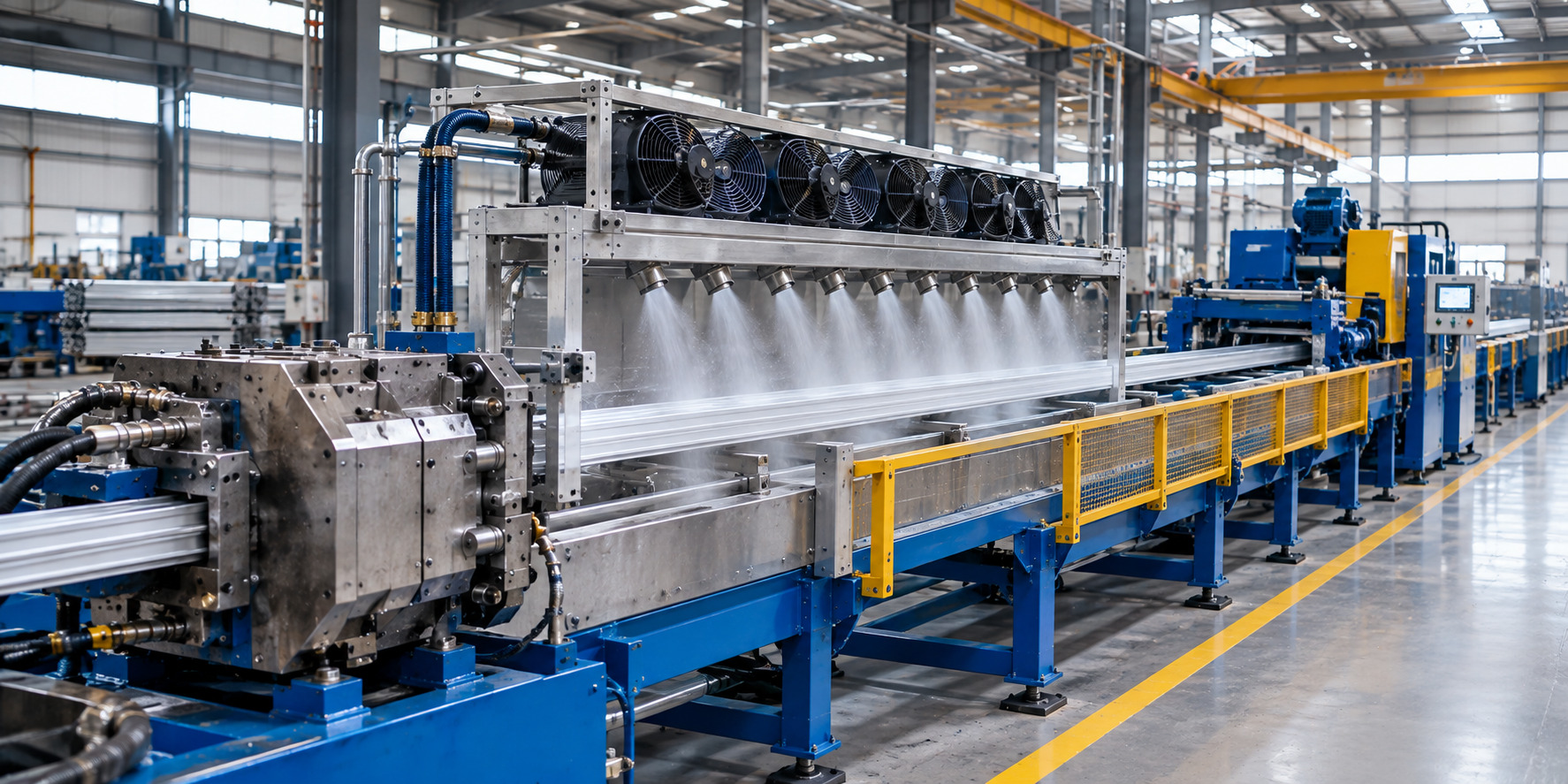
High-Velocity Dual Water-Mist & Air Quench Chamber
High-Velocity Dual Water-Mist & Air Quench Chamber
Cooling Table & Automatic Pulling
Profiles are guided onto wide graphite slat handling tables by computerized pullers, ensuring zero scratch marks, minimal twist, and uniform cooling down to handling temperature.
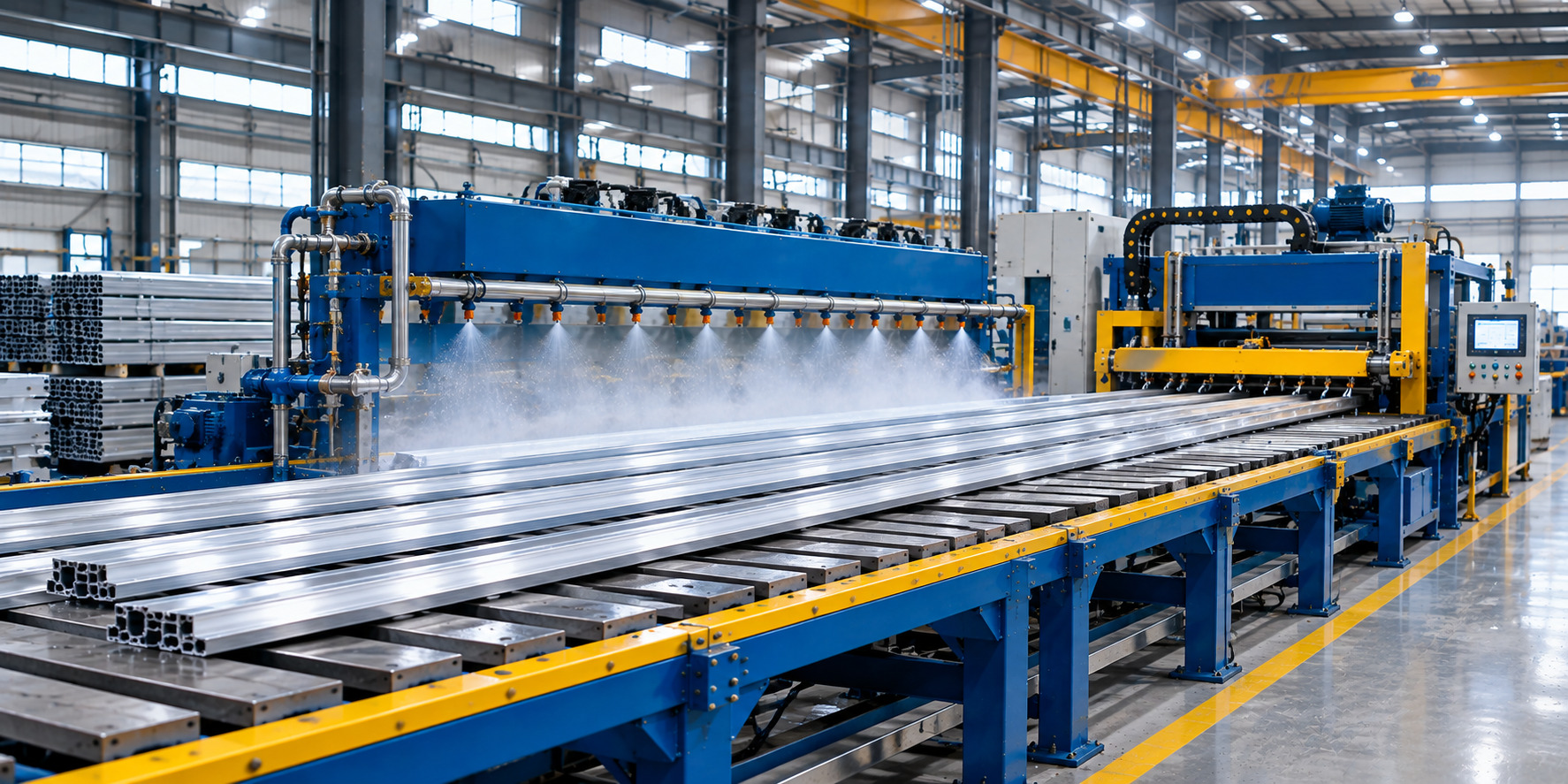
Computerized Double Puller & Graphite Slat Table
Computerized Double Puller & Graphite Slat Table
Hydraulic Tension Stretching & De-Twisting
Profiles are clamped at both ends in hydraulic stretching machines and pulled under tension (0.5% - 1% controlled elongation) to achieve absolute straightness and relieve internal extrusion stresses.
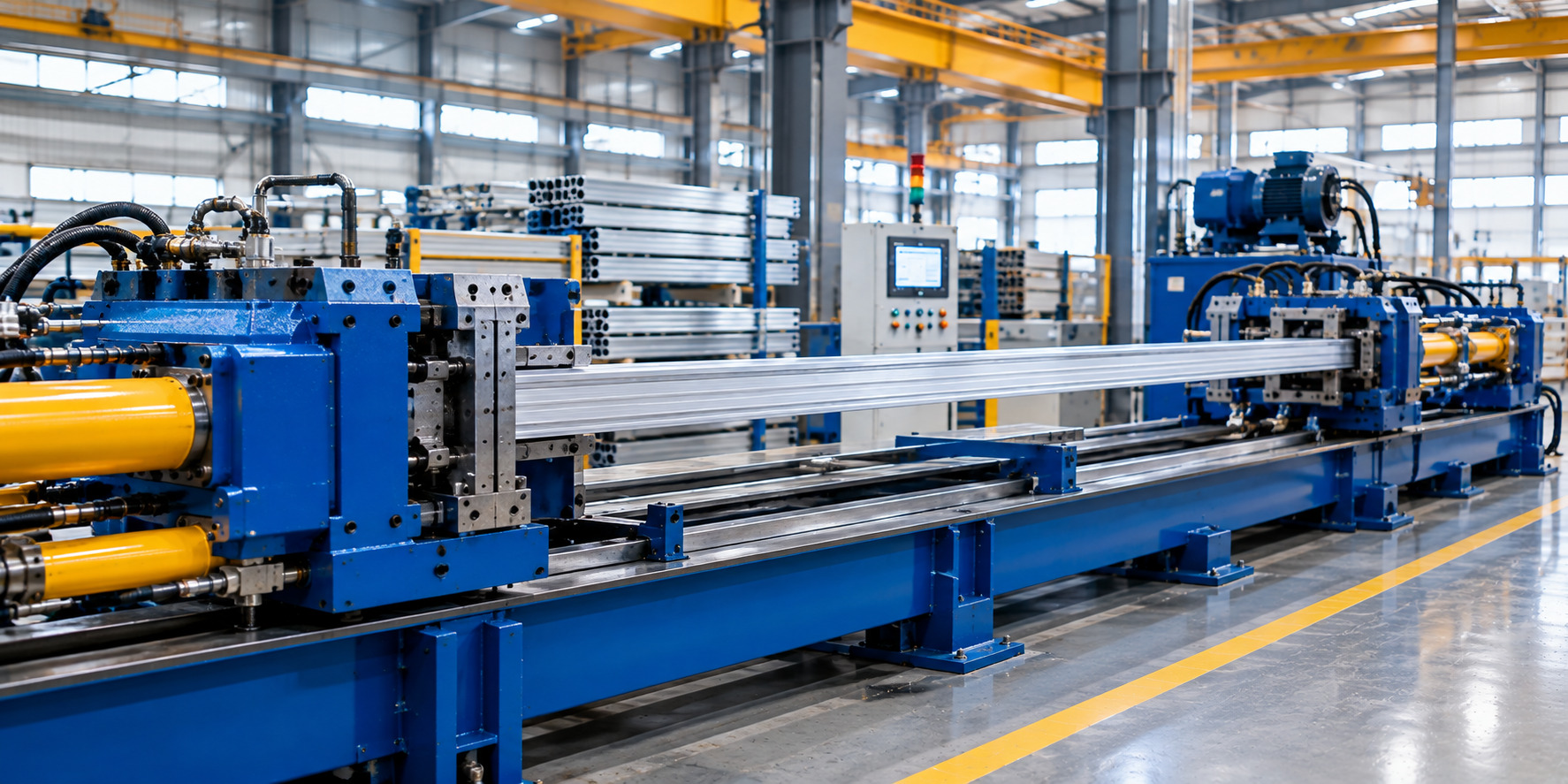
Hydraulic Tension De-Twister & Stretcher Bed
Hydraulic Tension De-Twister & Stretcher Bed
Precision CNC Saw Cutting
Stretched profiles are conveyed to automated high-speed carbide saws and cut to exact mill lengths or customized client lengths with tight length tolerances (±1.0 mm).
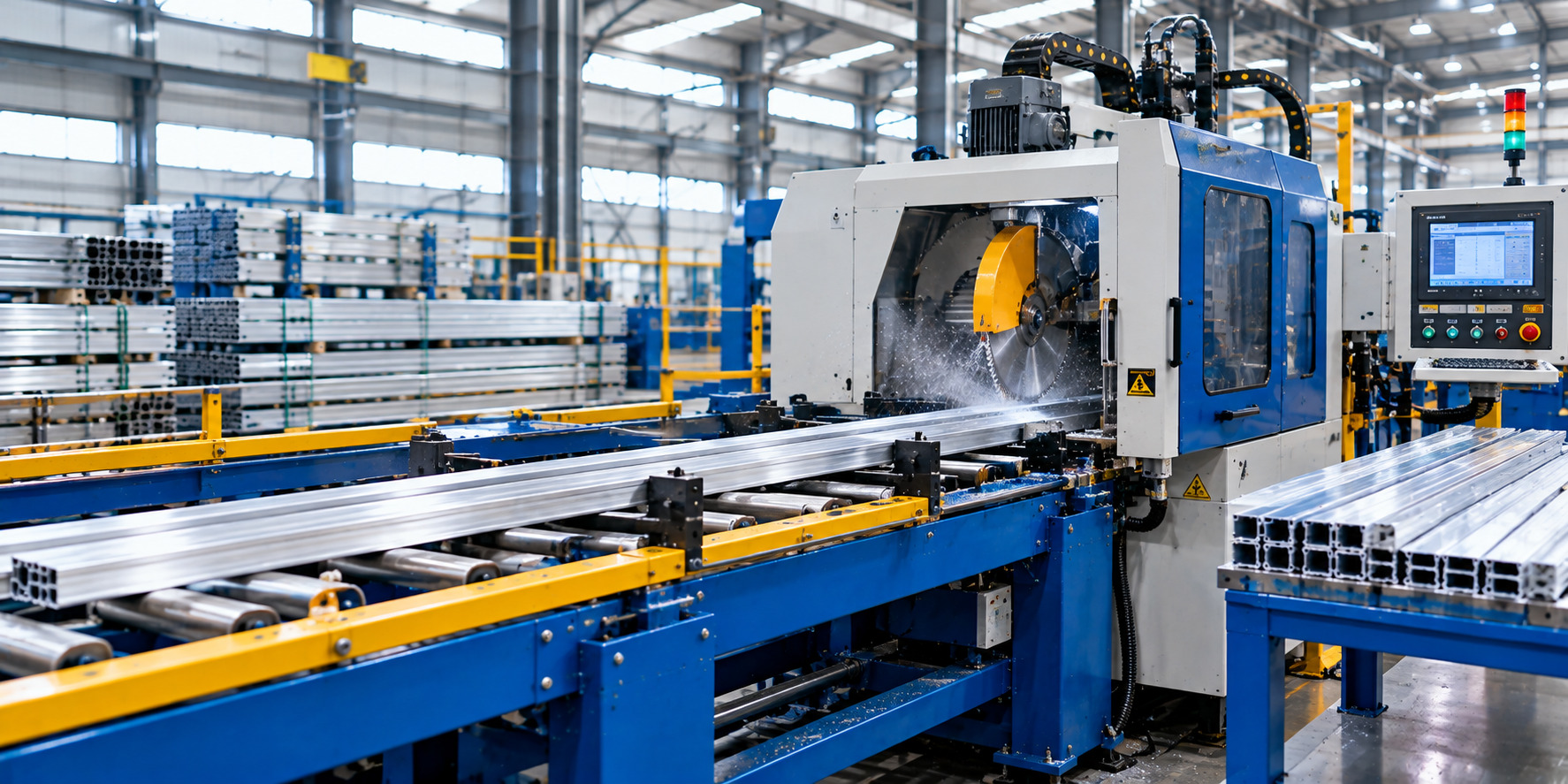
High-Speed Automated Tungsten Carbide Saw Line
High-Speed Automated Tungsten Carbide Saw Line
Artificial Ageing Heat Treatment
Cut profiles are loaded into thermostatically regulated precipitation hardening ageing ovens and soaked at 180°C - 200°C for 6 to 8 hours to attain peak T5 or T6 temper mechanical strength.
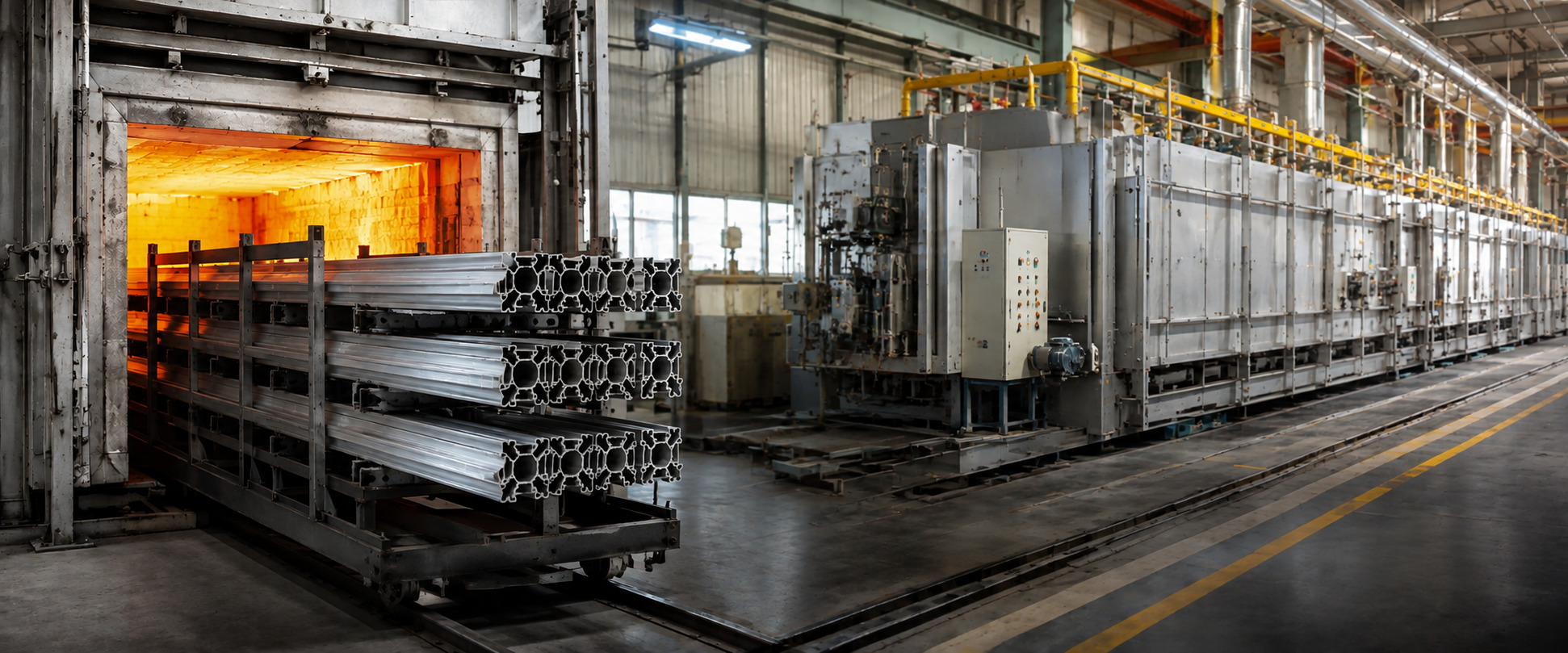
Computerized Ageing Furnace (T5/T6 Precipitation)
Computerized Ageing Furnace (T5/T6 Precipitation)
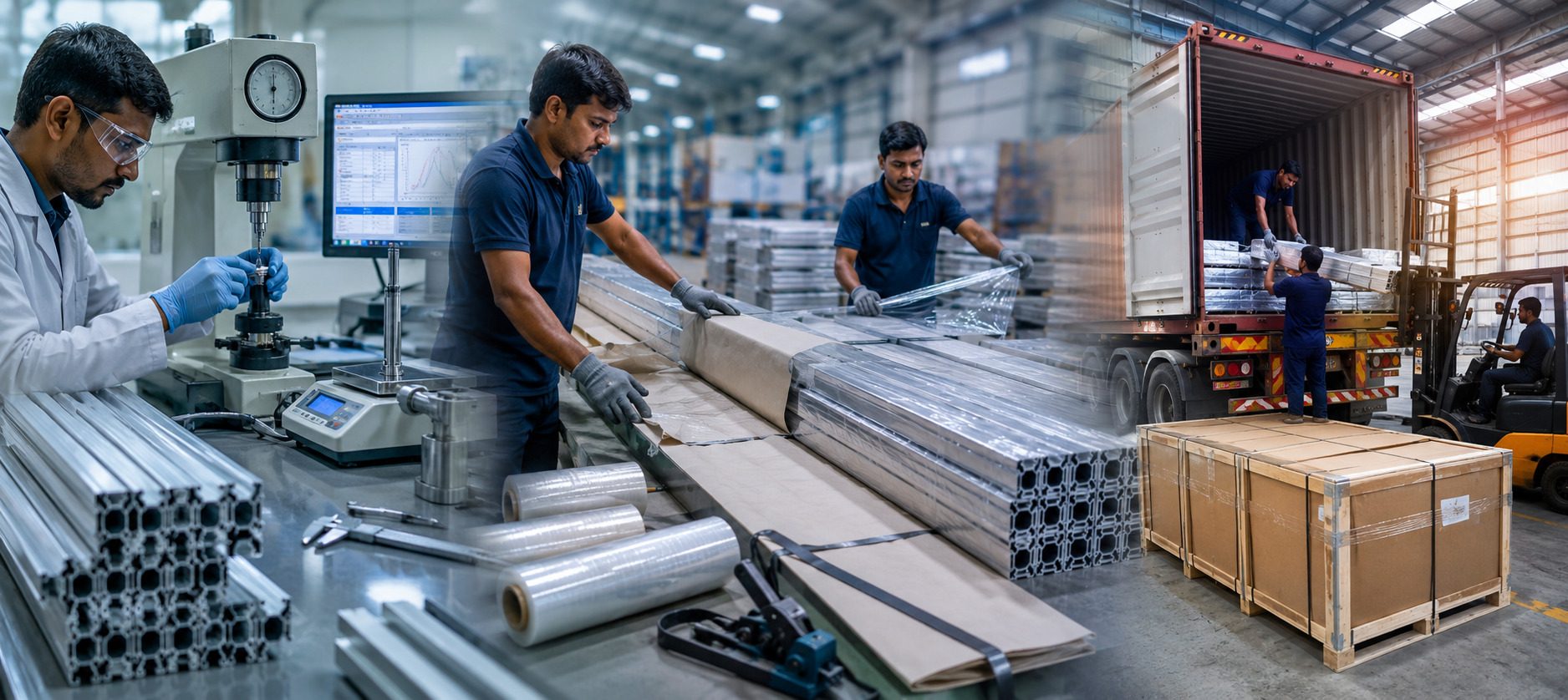
Quality Lab Clearance, Wrapping & Dispatch
Every batch is tested for Webster hardness, tensile strength, and coating thickness. Profiles are interleaved with protective paper, shrink-wrapped, and packed in wooden crates for safe transport.
Multi-Tank Anodizing & Electrostatic Powder Line
Multi-Tank Anodizing & Electrostatic Powder Line
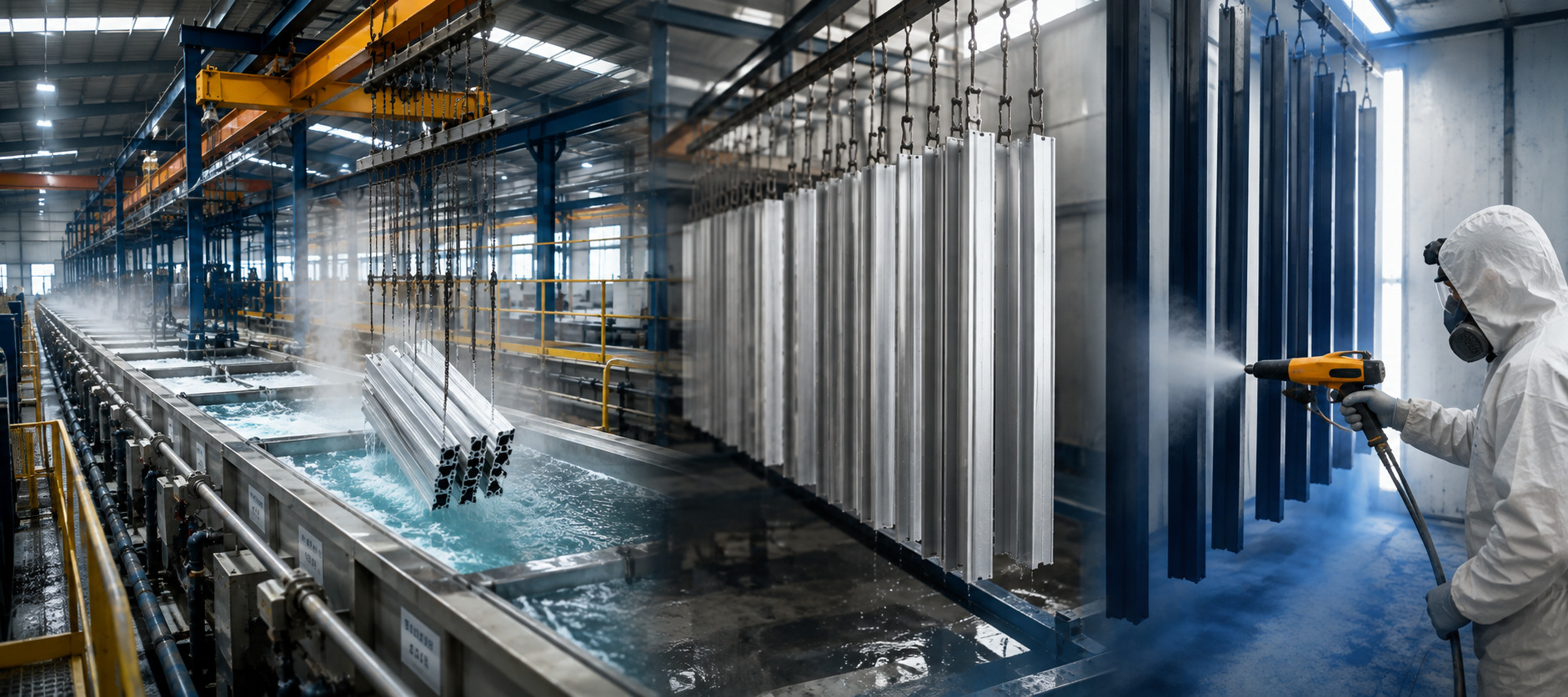
Surface Finishing (Anodizing / Powder Coating)
Profiles undergo automated 10-stage chemical pre-treatment followed by either multi-tank computerized Anodizing (10-25 micron) or electro-static thermosetting Powder Coating.
Metallurgical Testing Lab & Optical Spectrometer
Metallurgical Testing Lab & Optical Spectrometer
Aluminium Extrusion Specifications, Alloys & Standards
Direct factual answers to technical procurement questions regarding alloys, dimensional tolerances, custom die manufacturing, and quality certifications.
Schedule an On-Site Plant Audit or Tooling Consultation
We welcome OEM procurement heads, automotive engineers, and quality auditors to inspect our Panetha extrusion plant, aging bays, and optical spectrometer laboratory.